
Foods


ALL FOODS
SEED
SUET
HAND-PRESSED SEED BLENDS
NECTAR
hummingbirds



GLASS AND PLASTIC
DECORATIVE GLASS
CERAMIC
ACCESSORIES
PARTS
FEEDERS





TUBE FEEDERS
HOPPER/PLATFORM
SUET FEEDERS
SQUIRREL-PROOF
WINDOW FEEDERS
ACCESSORIES




WINDOW DECALS
FEEDER DOMES AND TRAYS
BRACKETS, HANGERS, POLES
SQUIRREL BAFFLES
NESTING ACCESSORIES
BATHS


ALL BIRDBATHS
HANGING
PEDESTAL
HEATERS AND DE-ICERS
MISTERS/DRIPPERS
Bird Feeders
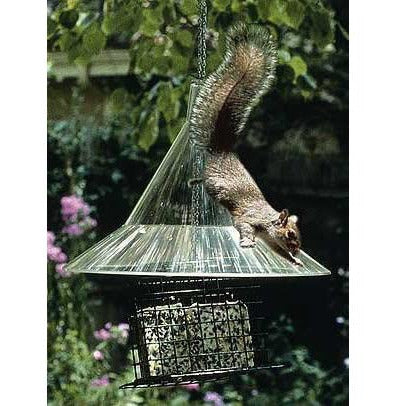
Squirrel-Proof Bird Feeders are by far the most popular type of feeder that we sell. Most people who feed birds will at some point have to battle with the squirrels. Most squirrel proof feeders tend to be one of two types, either cage-based which limits the squirrel from gaining access based on the size of the squirrel, or weight-based which causes the feeding stations to close under the heavier weight of the squirrel.
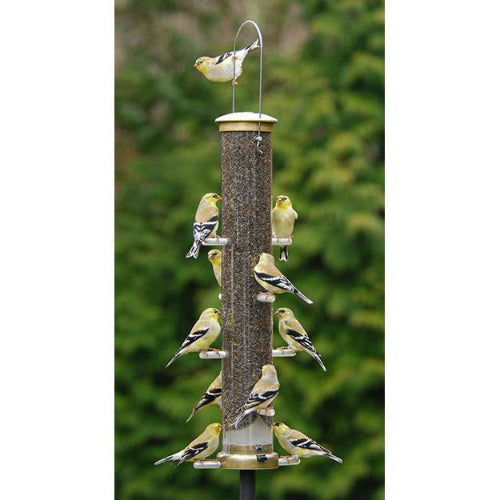
A tube style bird feeder is a cylindrical bird feeder commonly made from polycarbonate (a very strong plastic) with several openings and perches (preferably made from metal) where the birds feed from. Tube style feeders are easy for smaller birds like chickadees and goldfinches to use and more difficult for larger birds such as jays to feed from. Make sure you put a dome cover over the feeder to keep the rain out since wet moldy seed can cause serious problems for your new backyard friends. Consider adding a tray to the bottom to catch some of the seed and to entice some of the ground feeding birds such as towhees and juncos.Nyjer (thistle) feeders, also called "finch feeders" are specialized tube feeders designed for nyjer seed. Feeding ports on finch feeders are quite small to accomodate tiny nyjer seeds. Nyjer appeals almost exclusively to goldfinches, house finches, and Pine Siskins.
Bird feeders made from wood (cedar is the best choice) are typically either a hopper style feeder or fly-thru (aka platform) style.
Recycled bird feeders are made from recycled milk jugs and are gaining in popularity over wood. These Poly lumber feeders are impervious to moisture and are excellent choices for rainy or snowy locations. They are guaranteed not to fade, chip, or crack.
For a real close-up view of the birds, try a window bird feeder. These are typically attached to a window by suction cups and have the benefit of offering extremely close-up views of your feeding birds. Window bird feeders are an excellent choice for children or seniors who have more difficulty viewing birds in their backyards.
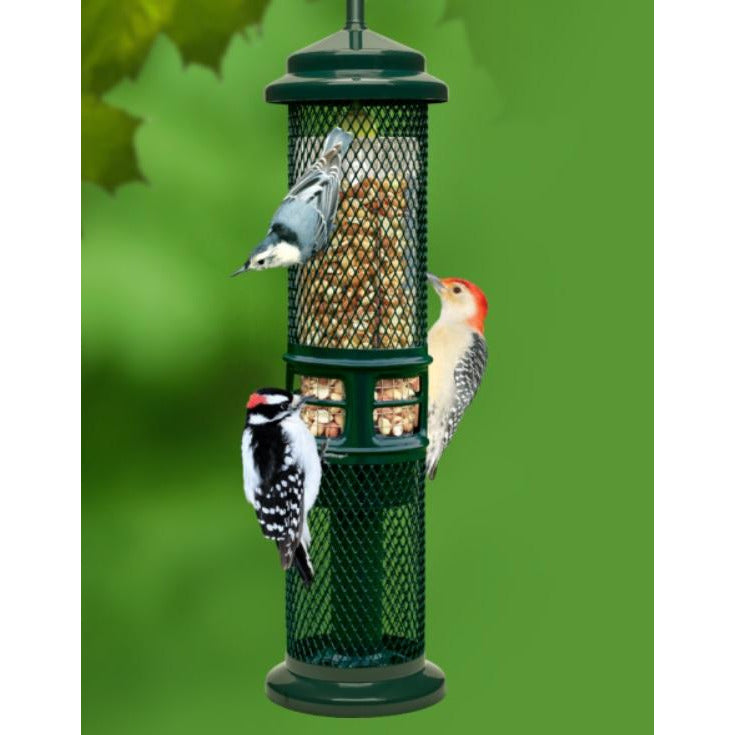
Peanut feeders supply either in-shell peanuts (for attracting jays), or shelled peanuts (for attracting woodpeckers, chickadees, titmice, and nuthatches).